European Interest in the JOGG approach is growing: The Netherlands as a model for lifestyle prevention
The Dutch approach to prevention for a healthier youth is increasingly gaining international attention. The JOGG approach, in which municipalities, schools, healthcare, sports organisations and local partners work together to create a healthier living environment for children, is more and more seen as a model for other countries. Two European funding applications are currently underway to explore how this model can be applied in other European contexts.

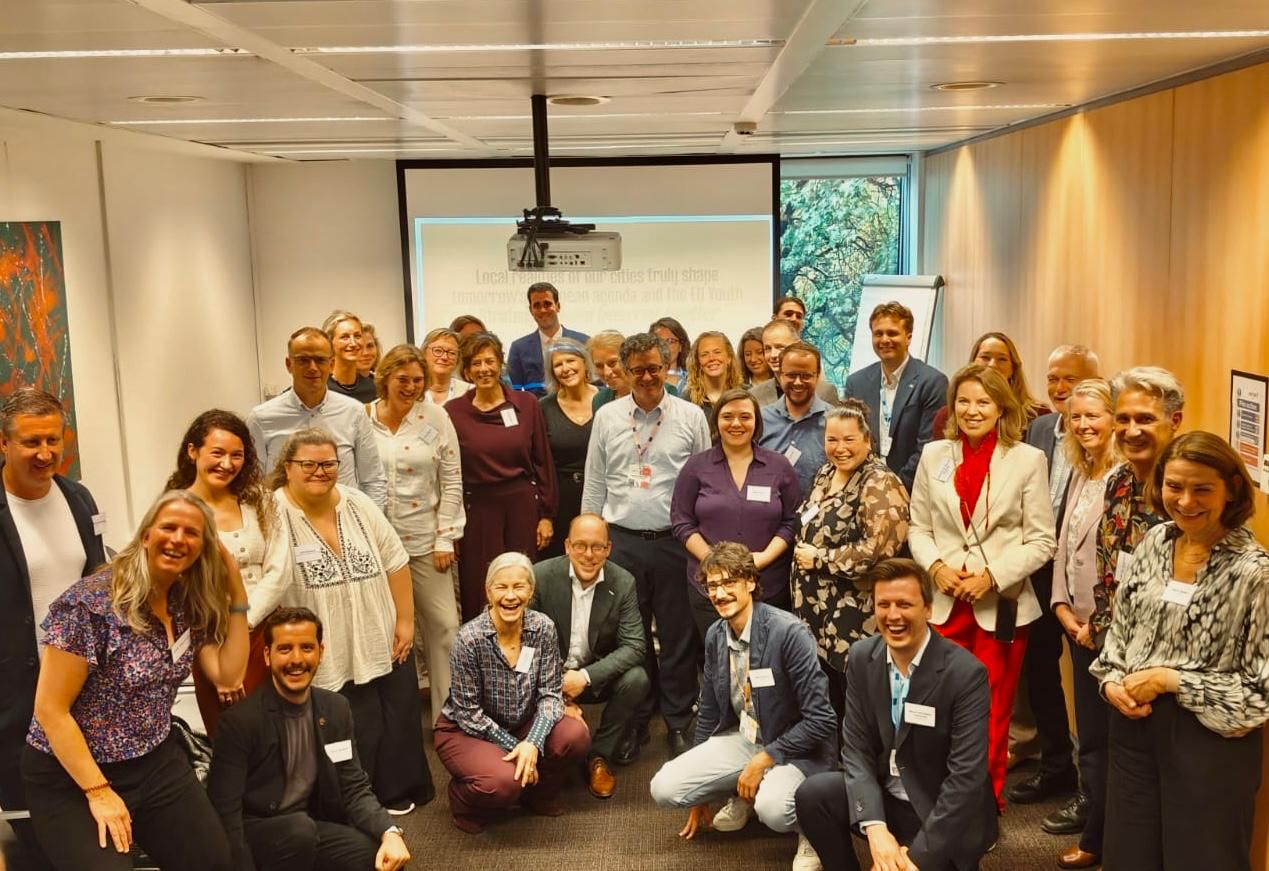
Carla Ramirez Sabat, from the Spanish municipality of Villanueva de la Cañada (member of the Spanish Healthy Cities Network), contributed to the applications. “I’ve only known JOGG for about six months,” she says. During a meeting in October, she asked JOGG colleagues: “Have you ever thought about implementing this in other countries?” She adds: “A week later, we were already thinking about a European funding application.”
The enthusiasm was immediate, including among other European partners who were approached. And that enthusiasm was very necessary, as the first proposal had to be completed within just a few months. “Sometimes we asked partners to join while the deadline was only ten days away,” says Ramirez Sabat. “Yet everyone still wanted to participate. That shows the level of recognition for the approach.”
Model many countries are missing
The fact that JOGG uses an scientifically grounded approach and a clear model is an important part of its appeal.
“The value of prevention is widely recognised,” the Spanish representative explains. “But most countries don’t have a model. There are no clear tools, no structured approach. What we lack is a model that enables municipalities to develop their own strategy, based on the needs of their residents. And there is often not enough time, resources or support to develop such a model themselves.”
Although she acknowledges that the model still needs to prove itself in different contexts, Ramirez Sabat says that an existing approach is therefore very attractive.
“If a model has already been developed and tested, it provides reassurance. You don’t have to start from scratch. We are all part of the same European community. If something works somewhere, why shouldn’t we learn from each other?”
International partners are also drawn to the integrated and structural nature of the approach, rather than isolated interventions, and to its strong alignment with local, national and European policy.
JOGG can provide the direction that helps develop better local solutions, without having to start from scratch Carla Ramirez Sabat
Alderman Spanish municipality of Villanueva de la Cañada
Searching for answers
The urgency behind this interest is significant. According to Ramirez Sabat, many European municipalities are concerned about the health of young people.
“In particular, mental health,” she emphasises. According to her, this development can also contribute to other problems, such as aggression or violence among young people. “We see that something is happening, but we don’t really know how to respond.”
Many municipalities share this sense of uncertainty. “You feel that something needs to be done, but you don’t know where to start.” That is why she is looking with interest at the Dutch approach.
“JOGG provides a certain level of guidance,” she says. “It can serve as our North Star. A course that helps us develop better local solutions, without having to start all over again.”
The results of the first funding applications are expected in May.